Why do we buy shares
1.0 Introduction
Many small investors and stock market traders misunderstood what they are actually investing in.
They are buying shares in a business. The primary objective of a business is to make money and deliver an acceptable Return On Investment to the business owners.
Business profits for public companies on the Stock Exchanges are reported as Earnings. The focus of this report is to explain why Earnings are the driving force and the main indicator for Stock market trends.
Firstly, we will go back to the history of companies and why people invest in shares.
2.0 Why were Companies invented
Companies were invented in the Dutch Republic (now The Netherlands) around 1600.
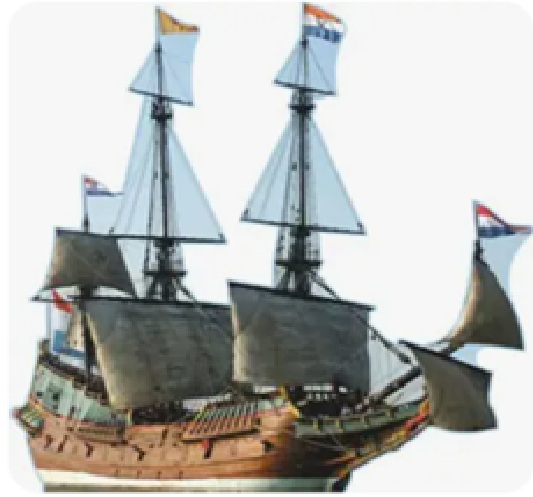
At that time, Dutch merchants were sending ships to especially the Spice Islands (modern day Indonesia) to buy spices and then sell back in Europe for a big profit.
Ships are at a high risk of sinking or being taken by pirates. To spread the risk, the Company entity was invented. This was called a Joint Stock Company. This enabled a group of people to invest in the venture by purchasing shares. Profits would be distributed in proportion to shares held. Shares could also be on sold to anyone, at any time and at a negotiated price.
The Amsterdam Stock Exchange was set up in 1602 to enable trading in Company shares.
2.1 The purpose of the first Companies
The sale of shares would raise $ (Guilders or Florins at that time) to:
-Purchase a ship and equipment
-Employ a ship crew for perhaps the 12 months that it would take for the venture
-Buy provisions for the crew
-Purchase trade goods to be used to trade for spices in the Spice Islands.
-Administration of the Company including liquidation on completion of the venture.
On return to the Dutch Republic from the Spice Islands, the spices and other goods would be sold. The ship and all equipment would also be sold and all assets liquidated.
The net profit would be paid to shareholders as a Dividend.
It was quite common for net profit to deliver a Return On Investment of over 500%.
2.2 Example Dutch Shipping venture
2.2.1 Initial Public Offering
The ABC Spices Company was established with initially 1000 shares.
Funds needed to be raised from sale of shares was based on:
-$1,000,000 -Buy ship and equipment
-$ 100,000 -Employ Captain and crew for 12 mths
-$ 100,000 -Purchase food and supplies for crew to last 12mths
-$ 100,000 -Purchase goods to trade (tools, cooking equipment & utensils and a wide range of cheap manufactured goods).
-$ 50,000 -Company administration and management including liquidation on completion of the venture
-$ 50,000 -Other
………………………
$1,400,000 Total
The initial share price was $1,400,000 / 1,000 = $1,400 per share
2.2.2 Estimated Earnings
Spices from the Spice Islands were in huge demand throughout Europe. The most profitable spices included nutmeg, cloves and mace.
The Markup could be up to 1000% in the early 1600’s.
Typical Sale proceeds and profit at the end of a venture
-$7,000,000 -Expected net proceeds of sale of spices @ 500% Markup.
-$ 100,000 -Sale of ship and equipment
Net Profit
-$7,100,000
less investment
-$1,400,000
…………………………..
$5.700,000 Net Profit
Net Profit is estimated to be $5,700,000 which are the Earnings.
Earnings Per Share (EPS) = $5,700,000 / 1000 shares = $5,700 per share
2.2.3 Return On Investment
The Return On Investment as a % of the initial investment cost:
=$5,700 / $1,400
= 407%
This was the ultimate objective of investing in shares in the 1600’s – to make a huge business profit.
This is the fundamental basis for buying shares in a business today – the expectation of business profits at a level acceptable relative to risk.
2.2.4 Price to Earnings ratio (PE)
When the initial shares were traded the Price to Earnings ratio was based on the Earnings Estimate.
=$1,400 / $5,700
=0.24
The PE is 0.24 at the start of the venture.
2.2.5 Speculation and Share trading
A Company ABC Spices may start trading at the IPO price of $1,400.
An investor WilyXYZ may consider the ROI of over 400% to be so high that they would accept perhaps a 200% ROI. This means WilyXYZ might offer up to $2800 for a share.
The acceptance of a lower ROI relative to risk and paying a higher price to buy a share is the basis for share trading. If ABC Spices was perhaps 10mths into the venture, then the risk of failure is much lower than at the start. The share price at that time is likely to be higher reflecting the lower risk.
Similarly, a ship wreck would wipe out the Company totally with the share price crashing to zero.
Gradually Companies were set up that were bigger and more risk diversified by having multiple ships trading different markets at different times.
Investors gradually accepted lower ROI as Companies became more reliable at delivering consistent profits.
Copyright
©2025 Ultima Investment Services
Disclaimer
The risk ratings and comments made in this report should not be regarded as
investment or trading advice.
The Risk Ratings and comments made in this report do not indicate any trading method
is profitable or that losses are not incurred.
Seek professional advice before making any financial decisions based on the
Risk Ratings or comments made in this report.
Ultima Investment Services does not accept any liability for any losses or
expenses incurred in applying the Risk Ratings or comments contained in this report.
 Ultima Investment Services